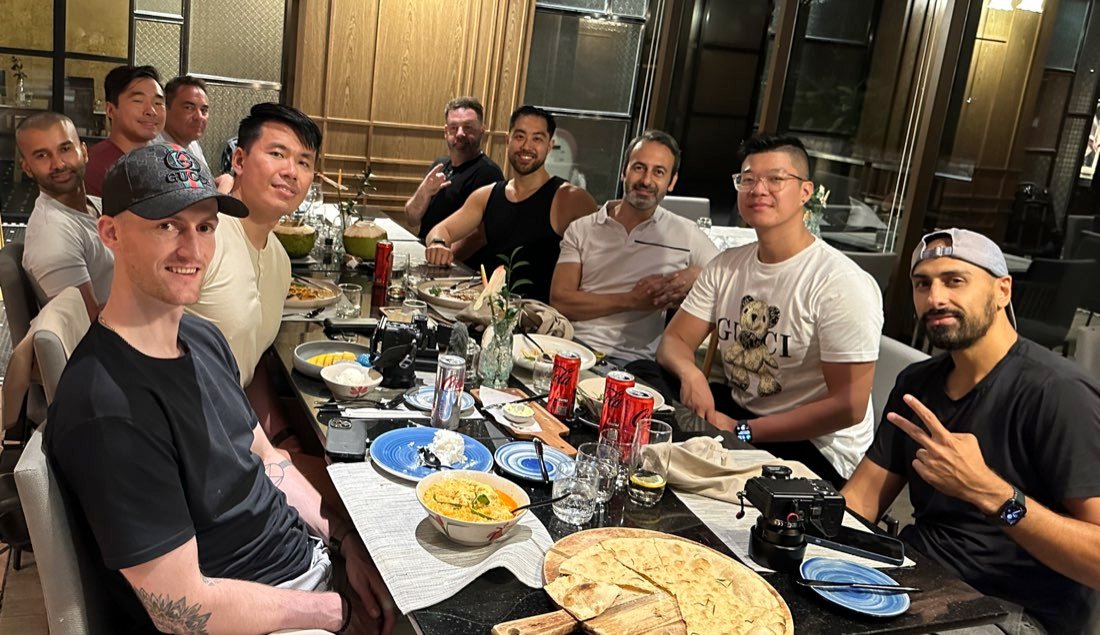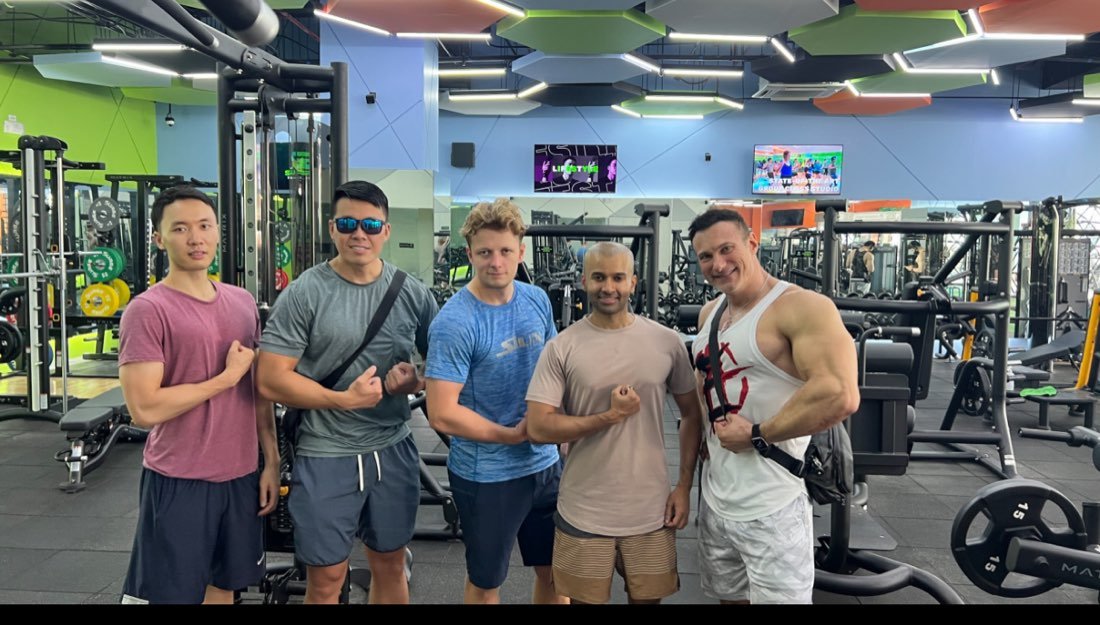
I was a software engineer. Forty to forty-five hours a week at the job, plus the gym, plus volunteering with a dating company on the side, before I ever coached a single paying client. I know exactly what it's like to be smart, capable, employable, and completely stalled out with women. That was me for years before anything changed. So when a client shows up with a great job, a great income, and a dating life that's basically nonexistent, I'm not confused about how that happens. I lived it, day in and day out, long before I ever thought about turning any of this into a coaching practice.
This is the guide I wish someone had handed me back then. It's for engineers, doctors, finance guys, founders, and anyone else whose career ran full speed while their dating life idled. It covers exactly why that gap forms, why success alone doesn't close it, and what actually does.
Why Smart, Successful Men Struggle With Dating
There's a stubborn myth that dating success is basically downstream of career success: get the job, the money follows, and the dating life follows the money. Reality doesn't cooperate. I've coached surgeons, engineers at top tech companies, and six-figure-plus earners who could not get a second date to save their lives, sitting right next to guys making a fraction of their income who had a full, active dating life. Income and dating success are only loosely correlated, and once you understand why, the fix becomes obvious.
Guys in this position often assume the missing piece must be something external (a better apartment, a nicer car, a more impressive title) because those are the levers that moved the needle everywhere else in their life. So they upgrade the external signals, the results stay flat, and the confusion deepens. The actual missing piece almost never shows up on a résumé. It's the specific, learnable behaviors below.
Dating is a social and emotional skill. It's built the same way any skill is built: through repeated, reviewed practice, ideally with feedback from someone who already has it. Career-track success stories, especially in engineering, medicine, and finance, are usually built by spending your teens and twenties in the library, the lab, or the office instead of out meeting people, taking social risks, and getting rejected enough times to build a thick skin and a real feel for reading people. You optimized one skill tree completely and left the other one at level one. That's not a character flaw. It's just where your hours went.
The Specific Traps Engineers And High Achievers Fall Into
1. Treating Dating Like An Optimization Problem
This is the single most common pattern I see in technically-minded clients, and it's almost a professional hazard. You're trained to solve problems by gathering more data, running more analysis, and finding the theoretically optimal input before you act. Dating punishes that instinct. There is no optimal opener, no perfect profile, no ideal number of texts before asking her out that a spreadsheet can hand you. Guys spend weeks A/B testing Hinge prompts and reading forums instead of just going out and getting real reps, because more research feels like productive progress and it isn't. At some point the answer to "what's the optimal approach" is simply: go do a hundred approaches badly and you'll learn more than a hundred hours of research ever taught you.
2. Leading With Credentials Instead Of Personality
If your entire adult identity has been validated through your job title, your degree, your company, or your income, it's natural to lead with those on a date. It's the story you're proudest of and the one you know best. It also reads as insecure, not impressive. Nobody falls for someone because of their résumé; they fall for someone because of how being around them feels. I've watched clients visibly relax once they stop trying to "sell" their achievements and start just being present, funny, and a little bit teasing instead. The dates go dramatically better, immediately.
3. Social Circle Atrophy
Long hours at a demanding job quietly erode your social circle without you noticing. You stop making new friends, your existing friend group shrinks to a handful of people you rarely see, and your only regular social contact becomes coworkers, who are usually in the exact same overworked, under-dated boat. No fresh social exposure means no new dating opportunities and no peer modeling for how to actually date well. This compounds year over year until a guy wakes up at thirty-five wondering where the last decade of his social life went.
4. Career Risk-Aversion Bleeding Into Dating
High-achievers are often trained to avoid failure at almost any cost: a bad quarter, a blown project, a failed interview all carry real professional consequences, so caution gets rewarded. That same risk-aversion, applied to dating, is fatal. Approaching a stranger, asking someone out, escalating physically: these all carry a real chance of rejection, and guys who've spent a career being punished for failure treat that rejection risk the same way they'd treat a career-ending mistake. It isn't one. A dating "failure" costs you five awkward seconds with a stranger who forgets you by lunch. Recalibrating what actual risk looks like is often the first mental shift that has to happen.
5. Remote And Isolated Work Environments
Remote work, small teams, or roles with minimal day-to-day social contact remove what used to be a low-effort source of casual social exposure: office friendships, work events, casual chats. If your job doesn't force any social interaction and your hobbies are solo ones, you can go weeks without a single new social interaction outside a screen. That's not a moral failing, it's just an environment that produces zero organic reps, which means you have to build reps deliberately instead of expecting them to happen on their own.
How To Get A Date When You Have Zero Free Time
The "I don't have time" objection is the one I hear most from this demographic, and it's usually a scheduling problem, not a real time shortage. You already block your calendar for gym sessions, project deadlines, and sprint planning. Dating needs the same treatment: a scheduled, recurring block, not something you hope happens organically between meetings. Two to three hours, two or three times a week, deliberately spent either on well-optimized app activity or in-person practice, will outperform a passive "I'm open to it if it happens" approach every single time, because it actually happens instead of getting deprioritized behind the next work fire.
Treat your dating life like a project with a backlog: apps optimized once and then largely automated, a standing weekly slot for in-person practice, and a lightweight system for following up on matches instead of letting them go cold in your inbox. This isn't romantic, but neither is being thirty-eight and realizing you never made time.
The other time trap worth naming directly: efficiency-minded guys often try to solve "no time" by cramming dating into the smallest possible slivers — a quick swipe session between meetings, a rushed coffee date squeezed into a lunch break. It rarely works, for the same reason cramming a workout into six scattered two-minute bursts doesn't build the same strength as one focused session. Interactions that matter (a first date, a real conversation, an in-person approach) need enough uninterrupted time to actually develop, not just technically happen. One well-protected three-hour block on a Saturday will outperform five distracted fifteen-minute attempts wedged between calls, every time.
How To Get A Girlfriend, Not Just A Date
Getting a date is the easier half. Turning dates into an actual relationship requires a different set of skills than getting the first date did, and a lot of successful men get stuck right at this transition. The same achievement-first instinct that got you the date can quietly sabotage what comes after: over-planning the relationship like a project, needing a defined "status," or applying the same metrics-driven mindset to a person that you'd apply to a KPI. Real connection is built through vulnerability, consistency, and emotional attunement: noticing how she's actually feeling, not just whether the "relationship project" is on track. Guys who make this shift, treating dating and then the relationship as an ongoing skill of connection rather than a solved problem, are the ones who actually end up with a lasting girlfriend instead of a string of short, competent-but-flat first dates.
There's a specific failure mode worth naming here because it's so common among high-achievers: getting a few dates in, deciding this one is "the one" based on compatibility criteria that read more like a job requisition than genuine chemistry, and then pushing for commitment before real trust or emotional intimacy has actually had time to build. Relationships don't compress the way projects sometimes can. Skipping the slow, sometimes inefficient-feeling process of actually getting to know someone (her actual fears, her actual sense of humor, how she handles a bad day, not just her stated values on a profile) produces relationships that look solid on paper and collapse under any real pressure. The unglamorous truth is that emotional intimacy takes calendar time you can't optimize away, no matter how efficient you are at everything else in your life.
What Actually Works
Fix Your Frame
Stop leading with your job, your degree, or your income. Let those come up naturally if they come up at all. Lead with personality: humor, curiosity, a bit of playful pushback. Your success is a background asset, not your opening pitch.
Treat It As A Skill, Not An Aptitude Test
You didn't walk into your first engineering job already excellent at it. You got good through supervised practice, feedback, and iteration. Apply the exact same growth mindset here instead of treating a rough patch in dating as evidence you're just "bad at this." You're bad at it the same way you were bad at your first year of the job, which is to say, normally and temporarily.
Get Real-World Reps, Not Just App Optimization
Apps are one channel. In-person skill (approaching, holding a conversation, reading interest, escalating) transfers to every channel and builds faster with direct feedback than months of solo app tweaking. This is exactly why the Vegas bootcamp exists: concentrated, high-volume, coached practice compressed into days instead of the years it would otherwise take to accumulate the same reps on your own.
Rebuild Your Social Circle Deliberately
If your friend group has quietly shrunk to coworkers, treat rebuilding it as its own project. New social circles generate their own organic opportunities and, just as important, models of what confident, well-adjusted dating actually looks like up close.
Recalibrate What Risk Actually Means
A rejected approach is not a failed quarter. Retrain the part of your brain that treats them the same, because until you do, you'll keep making the same risk-averse choice that's kept you stuck.
Common Excuses I Hear
"I'll focus on dating once I hit my next promotion / exit / milestone." There is always a next milestone. I've coached guys in their forties who said this exact sentence about their thirties. The skill gap doesn't close on its own while you wait. It just has more time to calcify.
"Women only want guys who are already good with women, so what's the point of starting." Every skilled person you've ever met started unskilled. The guys who look effortlessly good with women almost universally put in the same unglamorous reps you're avoiding. They just did it earlier or more visibly than you're seeing now.
"My income should be enough of a differentiator." It's an asset once there's already attraction and connection. It is not a substitute for either one, and treating it like a substitute is precisely what reads as insecure and repels the exact caliber of woman a lot of successful men say they want.
"I already tried dating apps and they didn't work, so the problem must be the apps." Apps expose exactly the same skill gaps as in-person dating (profile presentation, opening lines, conversational pacing, knowing when to ask for the date instead of texting indefinitely), just compressed into text. Swapping Hinge for Bumble or Raya doesn't fix a skill gap; it just moves the same gap to a different app. I've had clients blame three different platforms in a row before realizing the common variable across all three was their own approach, not the software.
What This Looks Like In Practice
The pattern shows up consistently enough across clients that I can describe a composite version without naming a specific student. A guy in his late twenties or early thirties comes in: strong job, six figures, maybe a couple of promotions in, dating life essentially frozen since college. First conversation we have, he walks me through his whole résumé before I've asked a single question about it, unprompted, like he's interviewing for the coaching himself. That instinct, leading with credentials to establish worth before any real rapport exists, is usually the very first thing we address, because it's happening on every date whether he realizes it or not.
Once we strip that habit out and replace it with something more playful (teasing, genuine curiosity about her instead of narrating his own achievements), the shift in how dates go is often immediate and obvious, sometimes within the same week. The harder, slower work is usually the reps: getting him from a handful of stiff, high-effort dates a year to a steady, low-pressure cadence of casual interactions, in person and on apps both, so that any single date stops feeling like a make-or-break event. High-achievers in particular tend to put enormous pressure on each individual date because they're used to every interaction mattering at work. Diluting that pressure through volume is often what unlocks the shift from "trying too hard and reading as needy" to "relaxed and actually attractive."
The guys who plateau are almost always the ones who fix the frame and stop there, treating the mindset shift as the whole project instead of the first step. Frame work makes the door open. Reps are what walk you through it. Skipping the second part after doing the first is like debugging the entrance logic of an app and never actually shipping it. The fix was real, but nothing changes in production until it goes live.
A Realistic Timeline
The frame shift (cutting the résumé-recitation habit, leading with personality instead of credentials) is often visible within the first few coached sessions; it's more of an unlearning than a from-scratch skill build. The conversational and approach skill takes real reps, typically six to twelve weeks of consistent, scheduled practice to see a genuinely different pattern of results. Building an actual relationship-ready skill set (the vulnerability and connection piece, not just the getting-the-date piece) tends to take longer and benefits most from ongoing mentoring rather than a single intensive event, since it's built through real relationships and real feedback over months, not days.
How Pickup Alpha Helps
I built this coaching practice around exactly this gap, because I lived on both sides of it: grinding a demanding engineering job while starting from zero socially, and eventually building both a career and a dating life I actually wanted. The Las Vegas bootcamp is built for guys who need maximum reps in minimum time, compressed into a few concentrated days with direct in-field coaching. The immersion program is for guys who need a longer, fuller reset, removed from the routine that's kept them stuck, for a full month. Online mentoring is for guys who want an ongoing coach reviewing real interactions and holding them accountable to the weekly reps their calendar keeps trying to swallow.
Quick Answers
How do I get a date as an engineer or a busy professional?
Schedule dating the same way you schedule everything else that matters: a recurring, protected block, not something left to happen organically. Combine efficient app use with real in-person practice, since in-person skill transfers to every channel.
How do I get a girlfriend, not just dates?
Shift from an achievement-first, project-management mindset to genuine vulnerability and emotional attunement. Getting dates is a skill of initiation; keeping a relationship is a skill of connection, and successful men often need to deliberately build the second one instead of assuming it follows automatically from the first.
Does being successful actually help with dating at all?
Yes, but only as a background asset once attraction and personality are already doing the work — not as a substitute for either. Leading with credentials instead of personality is the single most common mistake high-achieving men make on dates.
Is it too late to fix this if I'm already in my thirties or forties?
No. Social and conversational skill is trainable at any age, the same way physical fitness is. It's simply a question of consistent, deliberate reps starting now versus starting later. Some of the fastest, most dramatic transformations I've coached have been men well into their forties who had never done any structured work on this before and were stunned by how quickly things moved once they finally treated it like a skill instead of a fixed trait.
Your career took years of deliberate practice to build. Your dating life deserves the same deliberate approach instead of hoping it sorts itself out on the side. If you want a structured, coached path instead of more solo trial and error, that's what the call below is for.